

On March 16, 2026, President Ann Cudd addressed a special meeting of the Portland State University Faculty Senate, convened under Article 22 of the collective bargaining agreement. That provision governs retrenchment, the contract’s term for laying off faculty because of a financial crisis. The contract requires that meeting so the administration can present the University’s financial condition before any retrenchment. Article 22 is the only process under which Portland State can lay off faculty who hold tenure, and its steps begin with the University’s finances and the faculty’s comments, not with names.
The agenda had one item: the administration’s report, in four parts. The President began the meeting; General Counsel Cindy Starke explained the Article 22 process; Vice President for Finance and Administration Andria Johnson presented the budget; and the President concluded with next steps. The meeting then turned to questions.
During the question period, a senator asked about a tenured colleague whose unit had been named for possible elimination. In response, the President said: “We don’t have a plan yet because we’re following the contract… I can’t really provide the information until we’ve fully engaged the Article 22 process.”
But 18 days earlier, the administration had already drawn up a list of positions to cut.
THE LIST
On the morning of February 26, 2026, Vice Provost for Academic Budget and Planning Amy Mulkerin emailed Maneka Brooks, dean of the College of Education, with the subject line “Potential Layoffs.” She wrote she wanted to share “what was submitted as potential layoffs,” and “vacancies and retirements are tracked separately.”
Below that sentence was a table listing eight faculty positions, each with a position number, rank, faculty type, tenure status, and a program designation. Six of the eight held indefinite tenure. Under the program designation column, four entries read “Program Sunset,” three “Program Revitalization,” and one “Program Revitalization, Reduce by .25 FTE.” President Cudd and Provost Shelly Chabon were copied.
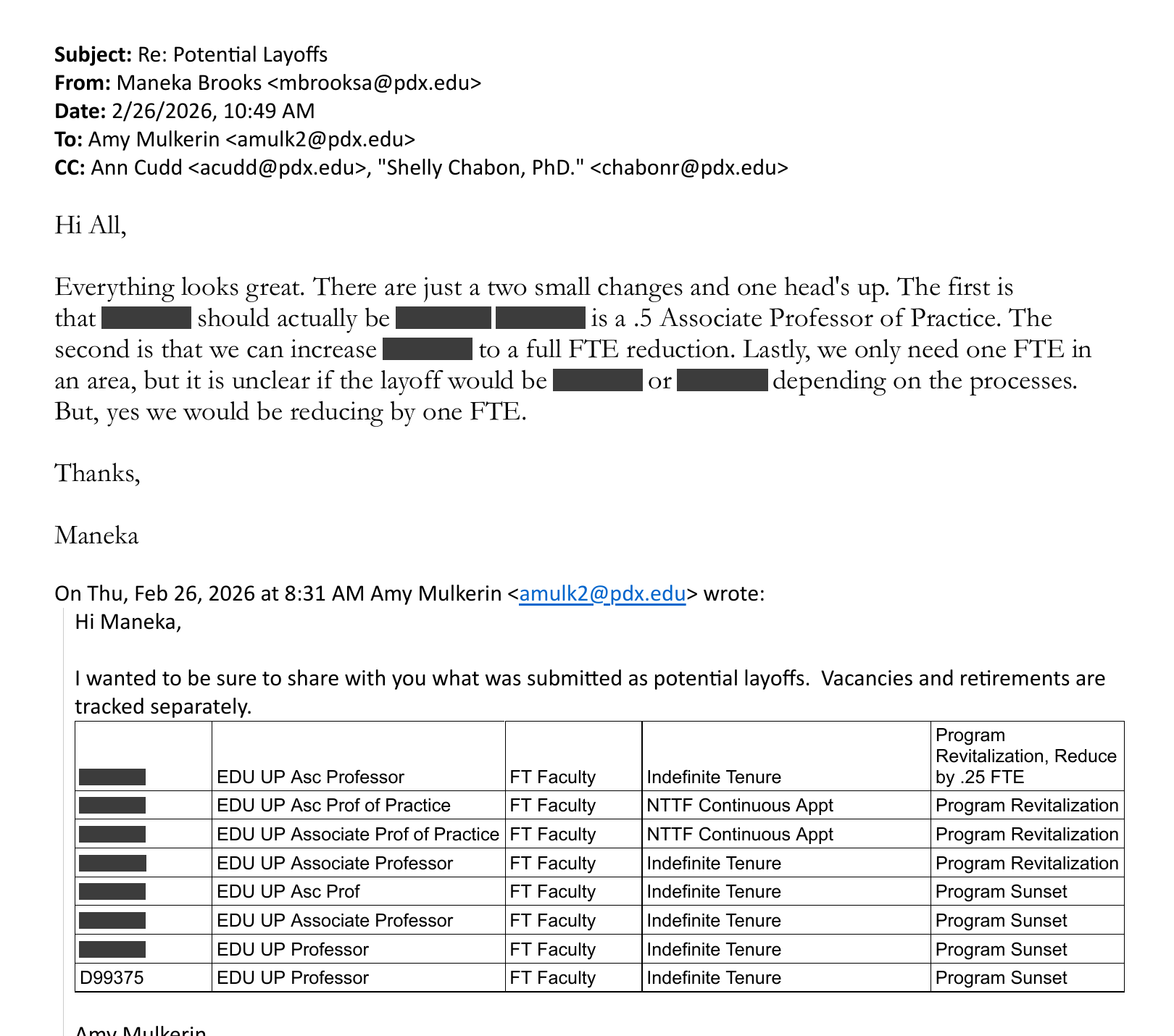
Exhibit 9, page 1, released under DA Order 26-59. Other position numbers are grayed; see note.
Two hours later, the dean replied. “Everything looks great.” She corrected one position number and raised the quarter-time reduction to a full position. Then she added what she called a heads-up: “we only need one FTE in an area, but it is unclear if the layoff would be” one of two numbered positions, “depending on the processes.”
One of the eight positions was mine.
Portland State released the email exchange in July in response to my public records request, with the list and the dean’s corrections blacked out under the internal advisory exemption. I petitioned the Multnomah County District Attorney, who on August 27 ordered release of the redacted text. Portland State complied on September 2.
THE CONTRACT
Article 22 describes the University’s fiscal-crisis layoff process. Section 3 requires notice to the union and its members, a presentation of the University’s financial condition to the Senate, and a comment period. Section 4 provides that a provisional plan, issued only after the President declares that retrenchment is necessary, “will include tentative assignments of reductions to departments.” A second comment period follows.
Section 5 provides that the order of layoff within a department is determined only when the President’s final plan includes layoffs, and then by category and inverse seniority, “based on departmental recommendations.” A memorandum of agreement attached to the contract links the individual faculty members’ notice period to the provisional plan.
In the order the contract sets them out, the steps assume that positions have not yet been identified when the process begins. Section 4 describes the provisional plan as assigning reductions to departments, and the order-of-layoff step comes last, when the President, on the department’s recommendation, decides which positions go.
On March 16, Starke described those steps to the Senate. Once the President “considers all the feedback she receives,” Starke said, “she’ll make a decision about whether to move forward and declare retrenchment is in fact necessary.” Only “after announcing that retrenchment is necessary” would the President “issue a provisional plan,” and “that plan will identify the impacted departments and will also identify the specific positions proposed for elimination.”
Johnson told the Senate that “no final decisions have been made.” Asked why her office had not modeled the revenue effects of program cuts, she answered: “We did not develop those scenarios because we do not have a plan yet.”
In her opening remarks, the President had said: “There are a range of reductions taking place across the university to address the deficit and deliver PSU to the financially sustainable state that we must reach. Not all of those reductions are part of the Article 22 process we’re talking about today.”
Three times after that, she said there was no plan. In her closing remarks: “Nothing is done, no decisions have been made.” To the senator asking about a colleague with a joint appointment, she gave the answer quoted earlier; and likewise to a senator asking about retirements: “So we don’t have a plan yet.”
Dean Brooks and Vice Provost Mulkerin, who had exchanged the list 18 days earlier, attended as ex officio members of the Senate. They kept silent.
THE PREPARATION
A second record released under the same order shows how the administration prepared for that meeting. On March 9, the day the President issued her Article 22 notice, the Senate’s presiding officer asked that the March 16 meeting be scheduled from 3:00 PM to 5:00 PM, with time for senators’ questions. He cited a precedent from the University’s only prior Article 22 use in 2021.
The request was forwarded to Vice Provost for Faculty Success Christopher Monsere, whose office leads labor relations and administers the retrenchment process. His reply, sent that evening to the President’s chief of staff and two university attorneys:
Please don’t respond today—we can think about it and get back to them tomorrow. This isn’t a contractual/CBA issue but a political decision for Ann. There may be nothing wrong with offering time for questions (2 hours seem way too much though), but we would have to do a lot of boundary and expectation setting that the questions should be about the budget/financial condition of the University.
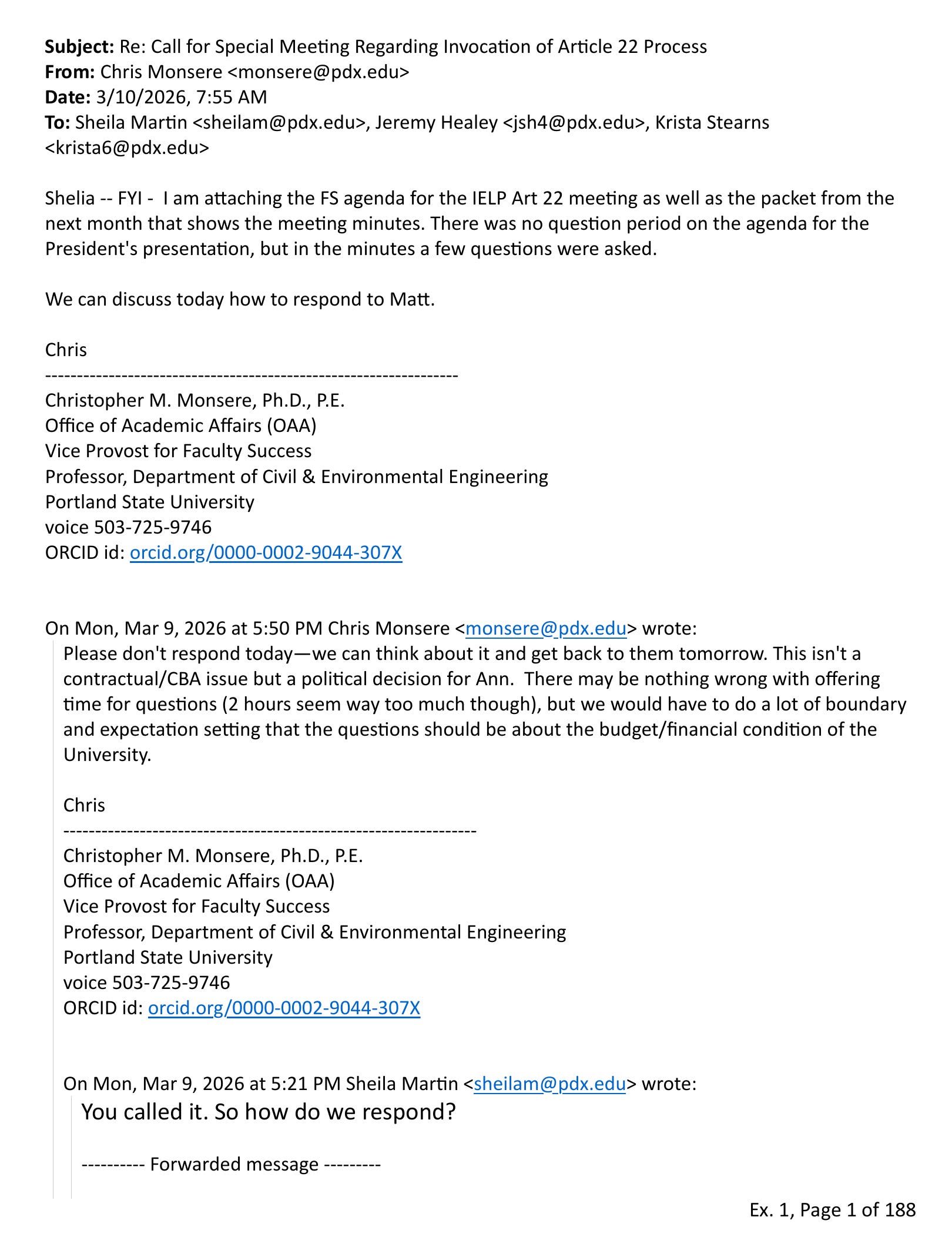
Exhibit 1, page 1, released under DA Order 26-59.
The next morning, he attached the 2021 Senate packets. By contrast, in 2021 President Stephen Percy issued a notice on February 4, presented it to the Senate on March 15, opened a 30-day comment period, and issued a provisional plan naming positions no earlier than May 3. Asked at the March 15, 2021 meeting how many positions would be cut, Percy told senators that “no decisions have been made as to numbers.” In 2026, the dean approved a position-level list 11 days before the notice.
The March 16 meeting began at 3:30 PM and ended at 5:13 PM. The presiding officer adjourned with questions still in the queue.
THE DEFENSE
The University will argue that the February list was budget planning, and it will quote the District Attorney’s order: “an unremarkable and professional planning discussion.” The District Attorney was deciding whether the University could withhold the redacted text, not whether it had followed the contract. The President will maintain that her statements were accurate, since she had not made any decisions yet, and that the list was one of the reductions she had described as not part of the Article 22 process. Each of those claims is true. A list is not a decision. The President had not yet declared that retrenchment was necessary. Some reductions, such as vacancies and retirements, need no Article 22 process.
Those claims cannot explain the final layoffs.
The Provisional Plan released on May 14 listed nine positions in the College of Education. The Final Plan released on July 21 confirmed seven. Five of the seven were on the February 26 list as the dean approved it. Two positions were added between February 26 and May 14, before the provisional plan. No departmental recommendation could have named them. Between May 14 and July 21, two layoff notices were rescinded.
None of the required contract steps—presentation, comment period, provisional plan, or departmental recommendation—spared a single one of the five. These were the same five positions the dean had approved in February.
For five of its positions, the February list was not a plan. It was the outcome. Nothing in the process that followed changed it. Nor was the list one of the reductions the President described as not part of the Article 22 process. Six of the eight positions on the February list were tenured, and Article 22 is the only procedure under which Portland State can eliminate such positions. A list that was not part of the Article 22 process would mean the University was selecting them for elimination in a way the contract does not allow.
The dean’s heads-up shows what the process was for. “Depending on the processes” refers to the contract’s order-of-layoff step. Under the contract, that step orders all of a department’s faculty by category and, within each category, lays off the least senior first, adjusted to keep the areas of specialization the department needs. The department makes that recommendation and submits it to the President through the dean. The dean may make her own only if “no timely recommendations are received from the department.” On February 26, no recommendation could have been late: the notice that began the process was still 11 days away. In the dean’s email, the positions had already been selected by program designation; the only question she left to “the processes” was which of two named positions to eliminate.
The Dean gave her own faculty the same account the President had given the Senate: that the affected positions would be identified only later, through the process. On April 7, at an all-college meeting three weeks after the Senate met and four days after the Board was consulted, a faculty member asked when people would actually be identified. “That’s the provisional plan,” Dean Brooks answered. “So after these 30 days of comment, people will actually be identified.” She had approved the February list six weeks before.
THE BOARD
Article 22 recognizes, in Section 2(b), the requirement to consult the Board of Trustees before the President may declare a retrenchment. The agenda for the Board’s April 3, 2026 meeting lists that consultation as item 8: “Consultation regarding Proposed Retrenchment (Article 22).”
On September 19, I wrote to the chair of the Board about the administration’s conduct in the retrenchment. I did not ask the board to withdraw its confidence in the President. As I told the chair, “governance is not the same as confidence. A board may choose to retain confidence in a president. But the board’s duty is to exercise independent oversight of the administration it appoints, and to be able to state specifically how it has done so.” I asked whether the board had examined the record, whether it had made a determination about the propriety of that conduct, and whether it was prepared to state the basis for its position directly rather than leave it to inference. The February 26 list is one item in that record.
The chair replied three days later. He wrote that the board “take[s] its oversight responsibilities seriously,” that it receives “regular reports from senior leadership about the retrenchment process, including objections to the process,” and that “the University also has processes in place to ensure compliance with its legal and contractual obligations.” On that basis he is “confident that the President and her leadership team have acted and will continue to act appropriately and with integrity.” He copied two attorneys from the University’s general counsel. His confidence rested on the reports the board receives from the leadership it oversees and on the processes in place to ensure compliance. The University’s compliance with the public-records law, for one, came only after the District Attorney ordered it to release the list at issue. He did not say whether the board had examined that record itself.
The President told the Faculty Senate she was following the contract. The contract is public. So is the list.
Sources
Exhibit 9 and Exhibit 1 are records Portland State University released on September 2, 2026, under Multnomah County District Attorney Public Records Order 26-59 (August 27, 2026). Quotations from the March 16, 2026 special meeting of the Faculty Senate are from the University’s Kaltura recording (15:12, 58:32, 1:19:21, 1:27:11, 1:38:00); the published minutes, which paraphrase rather than transcribe, are cited only for attendance and the order of speakers, not for quotations. The April 7, 2026 quotation is from Portland State’s recording of the All-COE meeting (media.pdx.edu/media/t/1_yw94rvdm). Both recordings are available to PSU account holders on the University’s Kaltura site and to the public through a records request. Quotations from the 2021 proceedings are from the Faculty Senate minutes of March 15, 2021. The February list for the College of Education is the only such list released to date; records for other colleges have not been requested.
A note on the image. Exhibit 9 is reproduced as the University released it. I have grayed the other faculty position numbers, leaving only mine, D99375. The ranks, tenure statuses, and program labels are unchanged. I have chosen not to name those colleagues.
The author is a professor in the College of Education at Portland State University. The views in this essay are the author's and do not represent the University.