

Readers of this newsletter know it as a place for higher education, politics, and culture. Today's essay is none of those, and all of them: it is about a member of my household who has been diagnosed with three months to live. Regular programming will return soon.
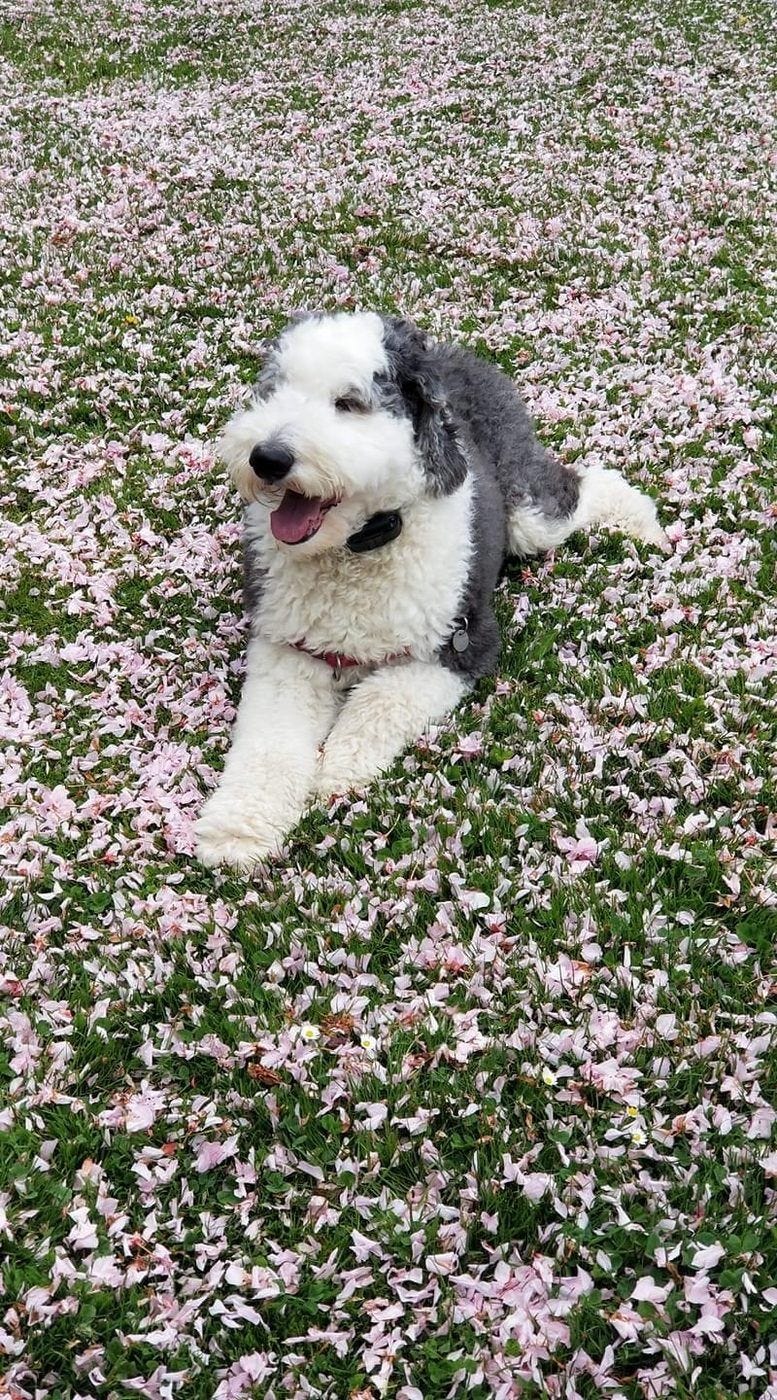
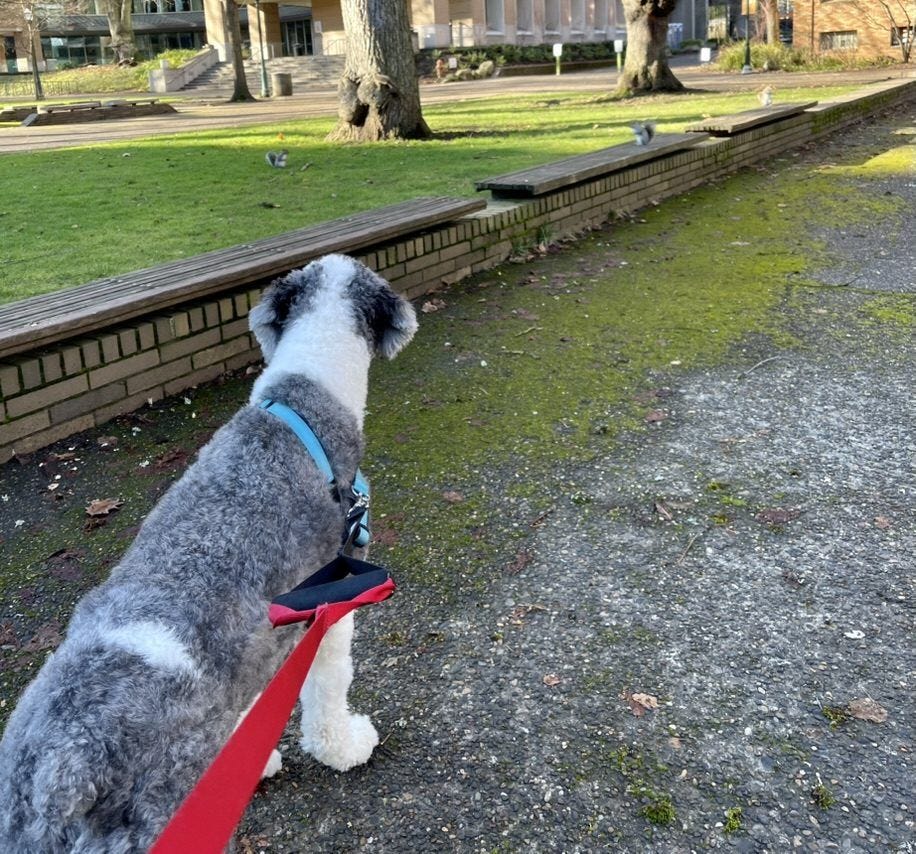
For most of his eleven years, Zuki has believed he could catch a squirrel. It is not a casual belief but an article of faith, held against all evidence. Lately he has brought that same faith to the wild rabbits at the Portland Rose Garden, the cows and the goats behind the fence at a farm, and the fat campus squirrels who sit on the benches at Portland State and let him come as close as they please.
Between him and each of them lies a distance—a length of grass, a stretch of chain-link, a few yards of wet pavement—that the other animal has measured and Zuki has not agreed to. He stands at its edge, his whole body leaning in, quivering. What he means to do when he gets there depends on the animal: he would run a squirrel down, but he only wants to mingle with the cows and the goats. It has never mattered which; either way, what he cannot bear is the distance.
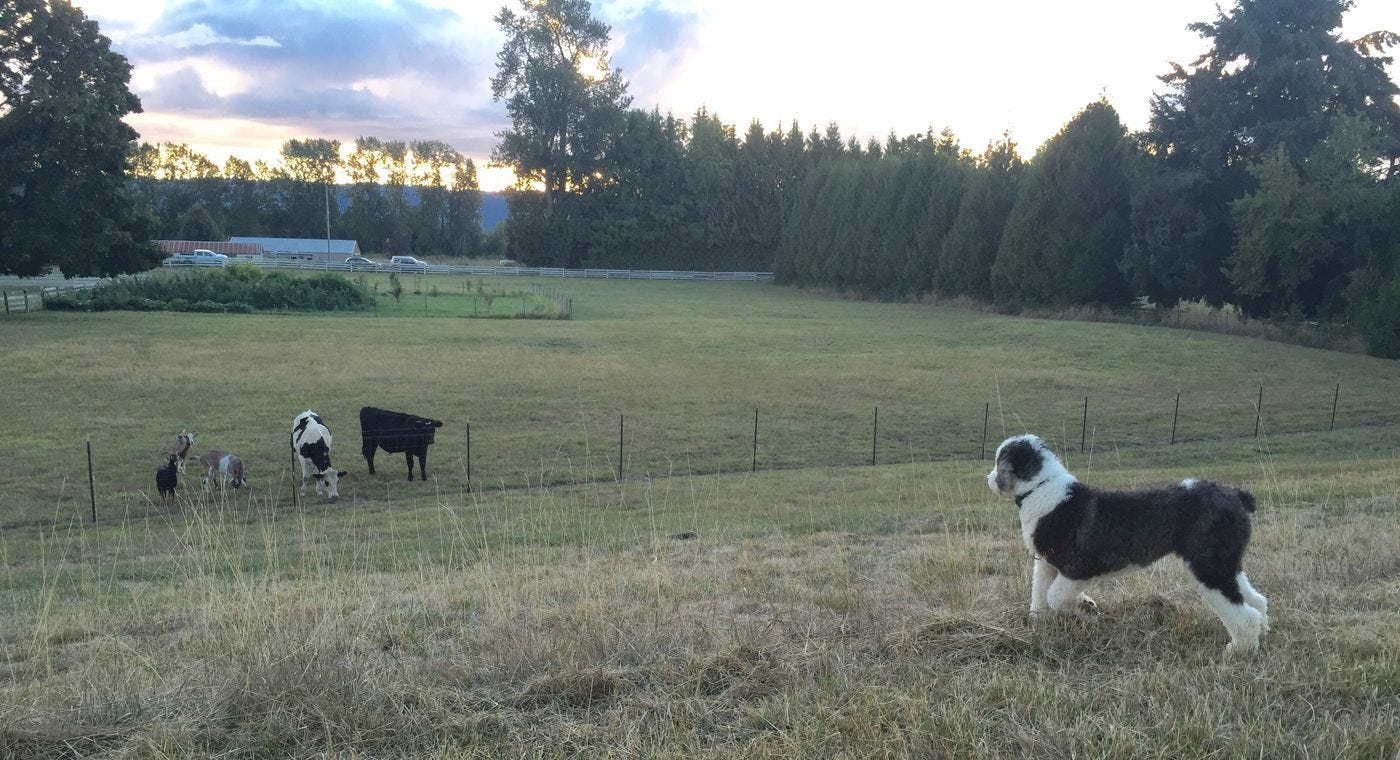
The goats and the cows, and the whole field between.
Before the diagnosis, we drove out every morning to watch the rabbits. They would graze the low greenery, wild and unhurried, until they caught his outline against the light and went still. After a while they would decide the morning was over, fold themselves back into the hedges, and we would drive home. It was hardly an outing at all, but he treated it like the whole day’s work.
Then one July morning, while we were vacationing overseas, a call came from our Portland home. Our sitter had noticed Zuki chewing at his left side and favoring it. Worried, she took him to the vet. The X-rays showed a mass the size of a marble and nothing more; only a biopsy could determine whether it was benign.
He was eleven. Only the December before, he had been diagnosed with hip dysplasia and arthritis in the leg, and across a spring and summer of our comings and goings, the sitter had watched him slow down.
We came home. They aspirated the lump, but the results were inconclusive, so they surgically removed it from his mouth, where it had been troubling him, and sent it to the lab. A week later the answer came in the shortest form it could take: melanoma, the aggressive kind, three months.
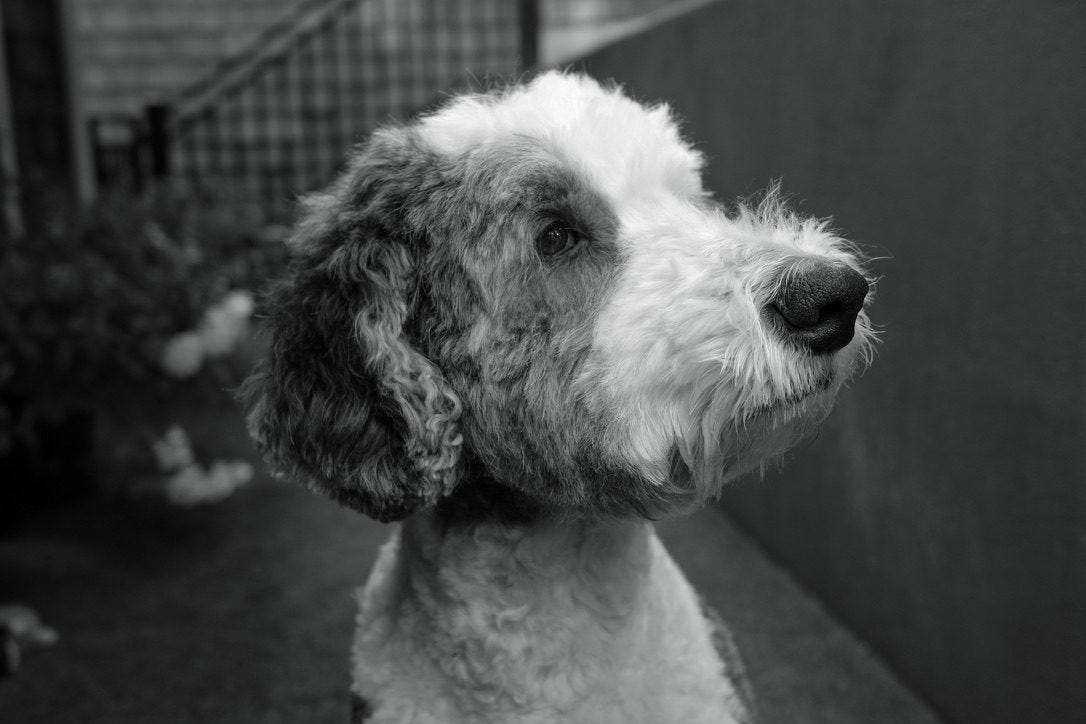
What I want said first is that he has had a wonderful life.
It began in 2015, when we drove him home from Talent, a town down in southern Oregon, a black-and-white puppy small enough to sleep the length of the drive. He grew into the house, and the household grew around him.
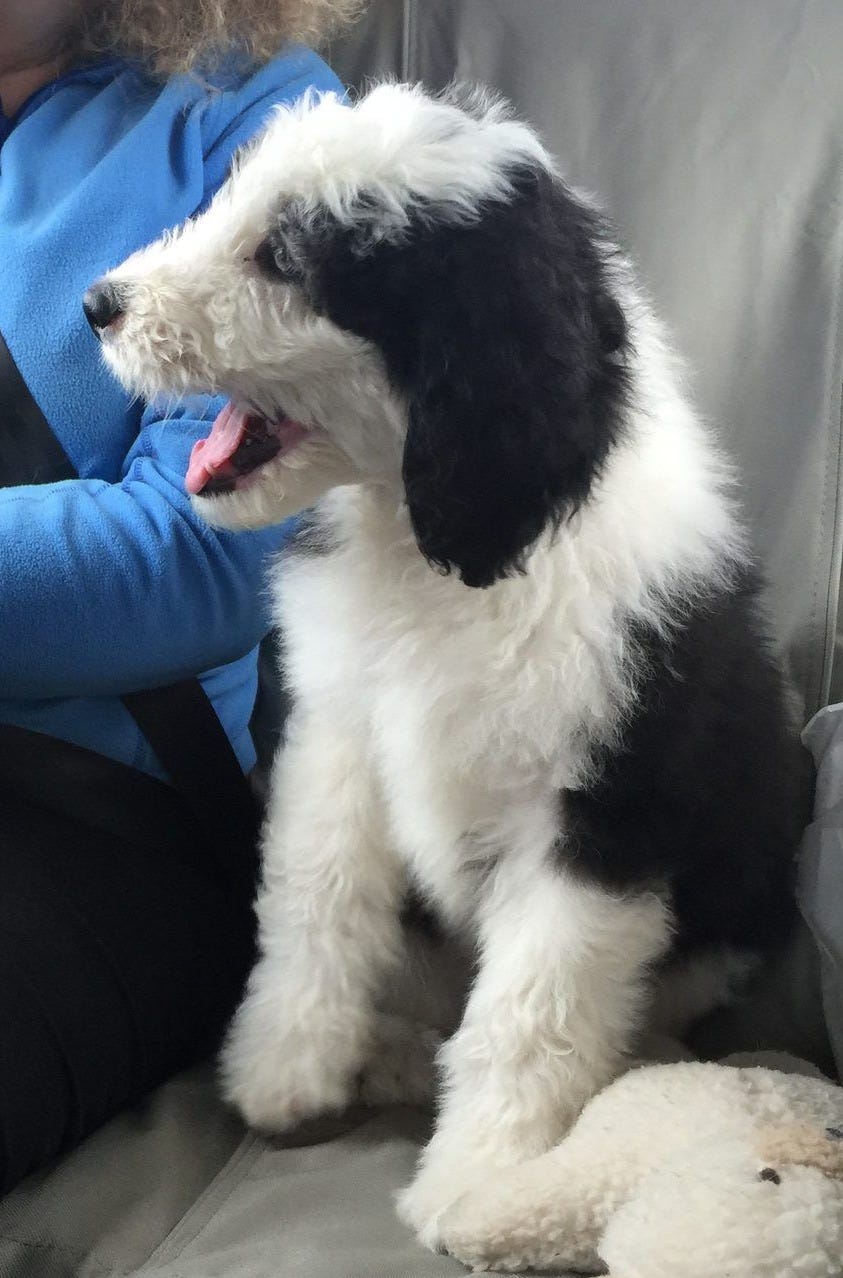
The drive home from Talent.


His first year.
He took formal swimming lessons and never learned to swim. The water was no more moved by his faith than the squirrels were.
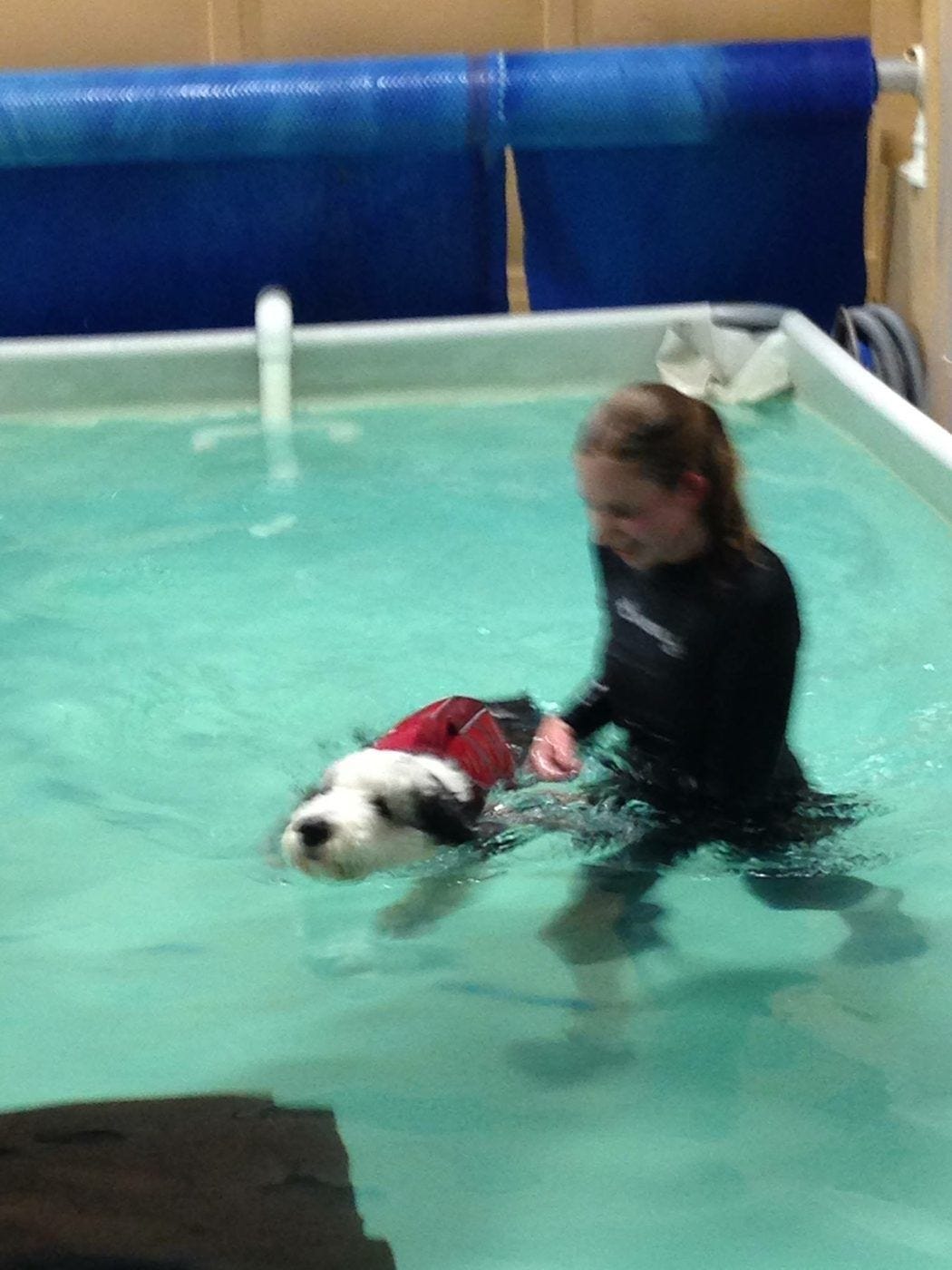
Swimming lessons, which never took.
The coast, though, is another matter. He walked the long gray beaches of the Oregon shore, tongue out and wet to the elbows, following Laurie down the tideline with the surf unspooling behind them.


The Oregon coast.
He knows the city’s parks in every weather, snow one winter and wet leaves the next fall, and he runs when the ground allows it, flat out down the side yard with his ears streaming, in a blur no camera ever quite catches.
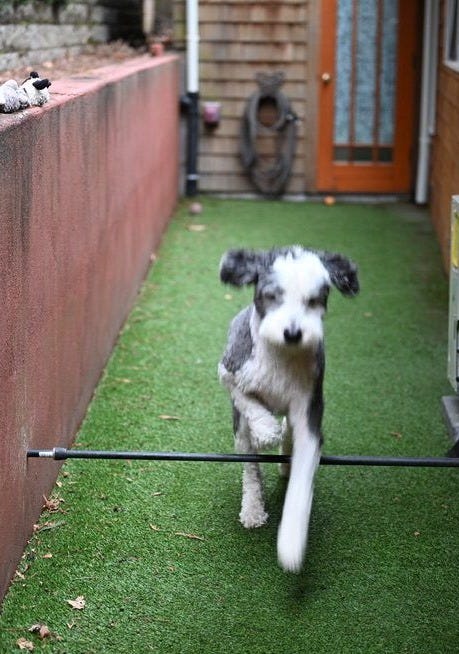


Snow one winter, leaves the next.
He is, it should be said, a much-celebrated dog. There are barkdays with his name spelled in glitter, a Fair Isle sweater for the coldest week of the year, and a paisley bow tie for special occasions, and he wears all of it with the ease of an animal who has always understood he is the reason for the evening.


Barkdays, holidays, Santa, and bow ties.
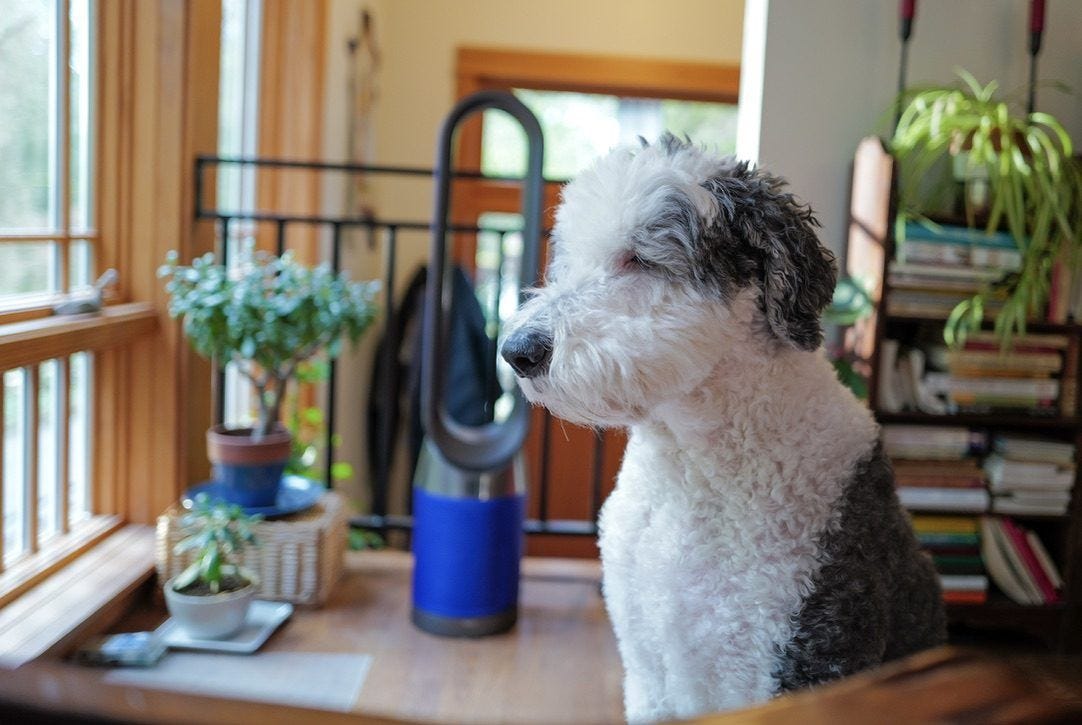
And he is a house dog in the deepest sense: a creature of rugs and window seats and a cot bed set against a wall of books, where he sleeps through the long afternoons while the household reads and works around him. The framed painting above his favorite rug is a bowl of flowers; he never looks at it, and it presides over him anyway.
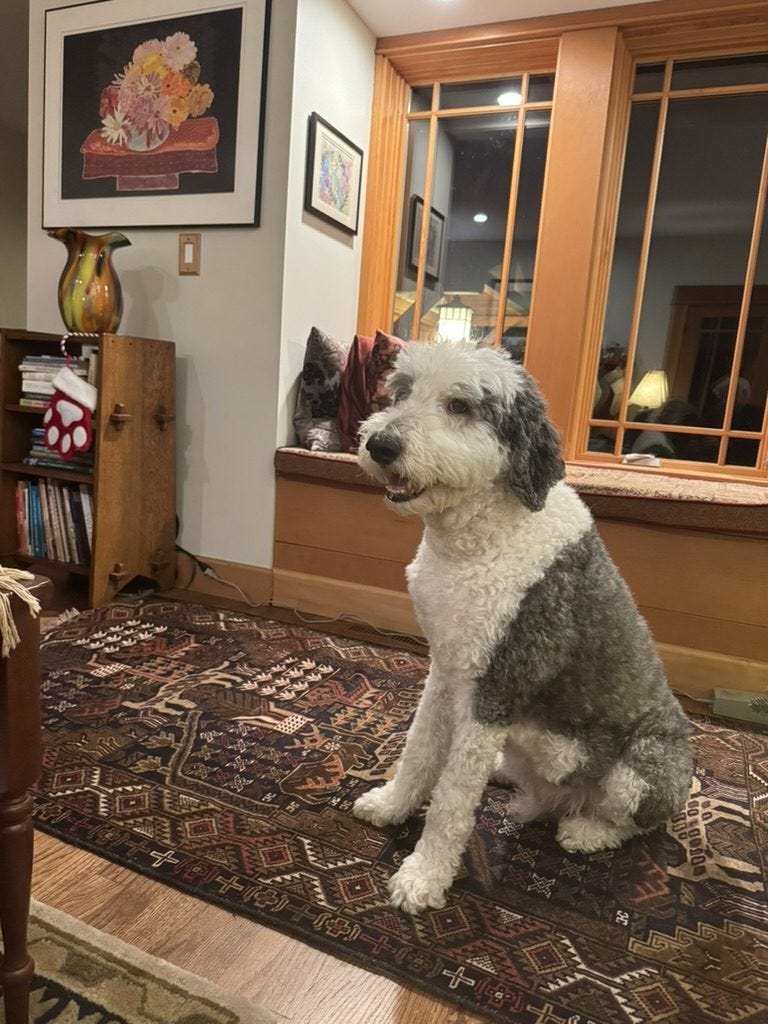
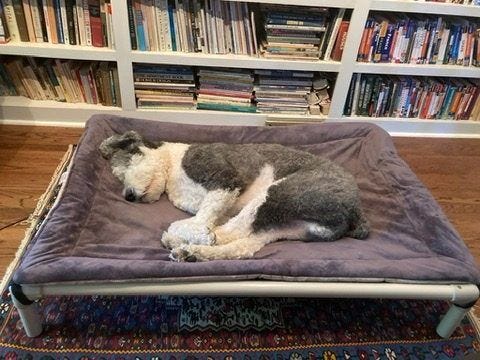
Afternoons, among the books.
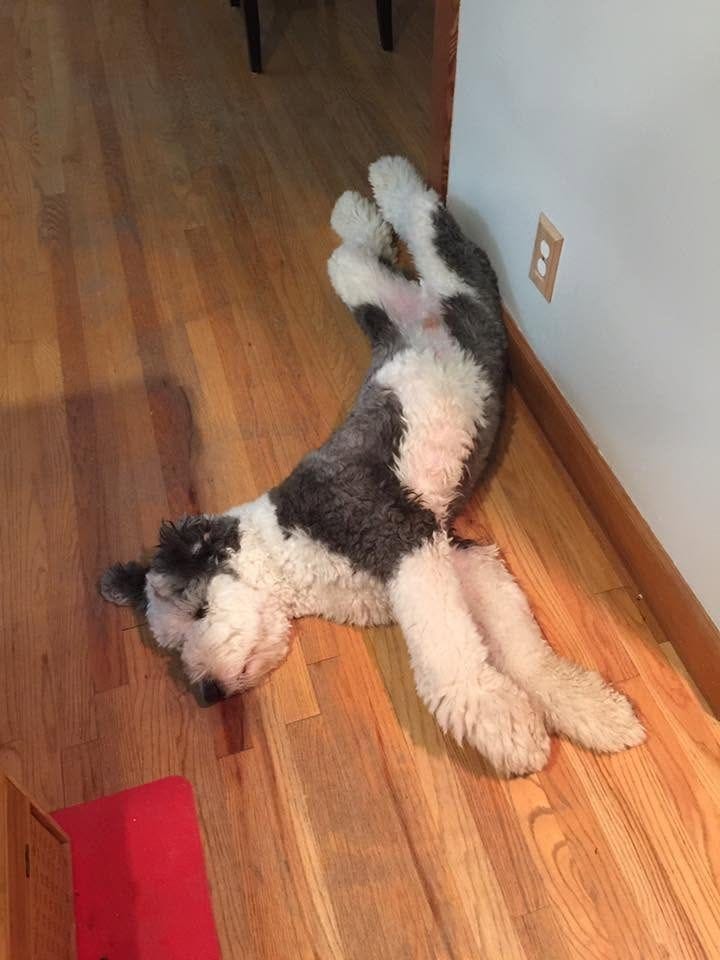
The contortionist at rest.
He belongs to the people in that house, and they to him. At the holidays the circle widens—the table crowded, the chairs full, the dog somewhere in the middle of it.


His people.
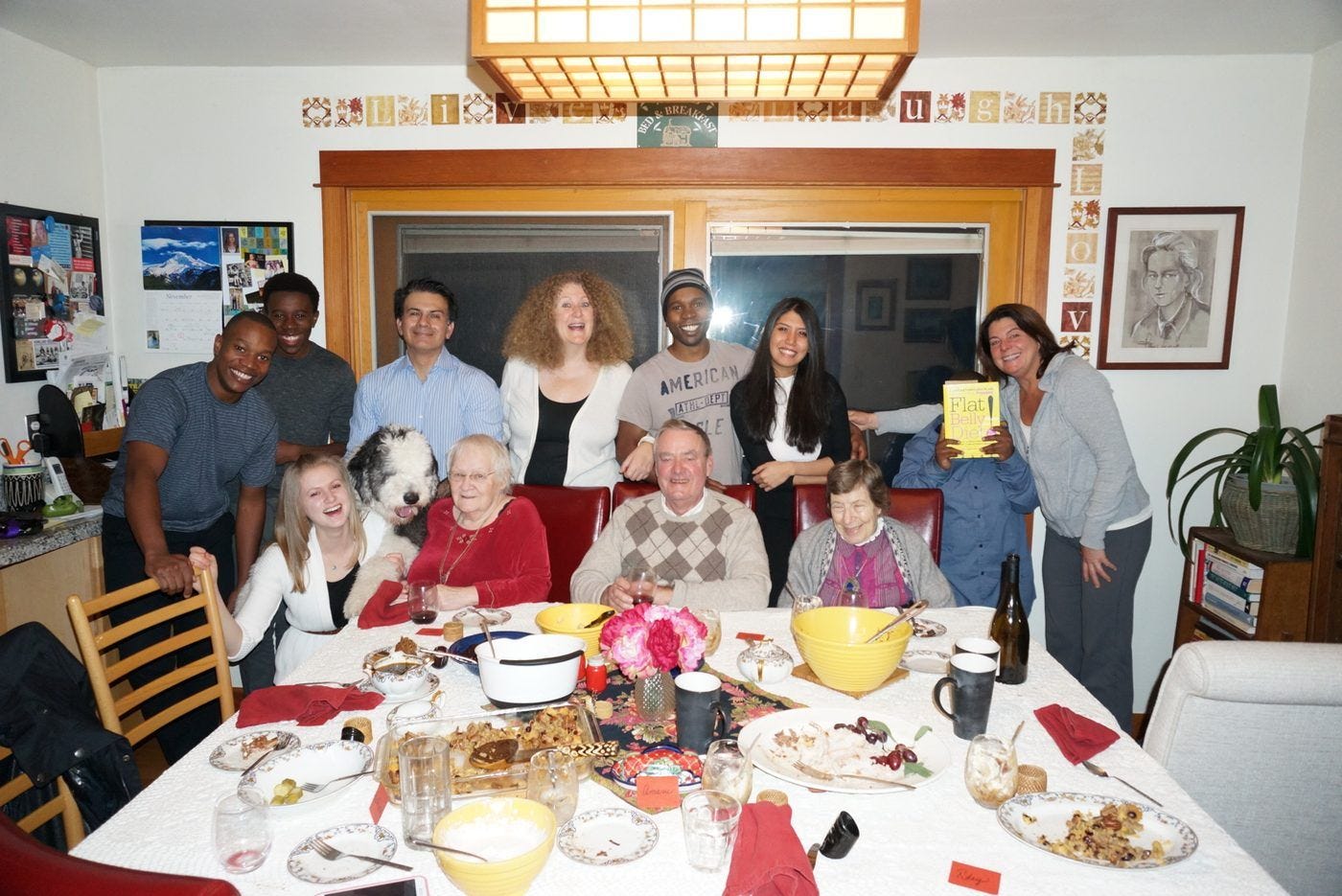
A full table, and Zuki in the thick of it.
He has never thought much of being boarded. At the dog hotel, the webcam caught him with his paws up on the gate, taking the measure of it.
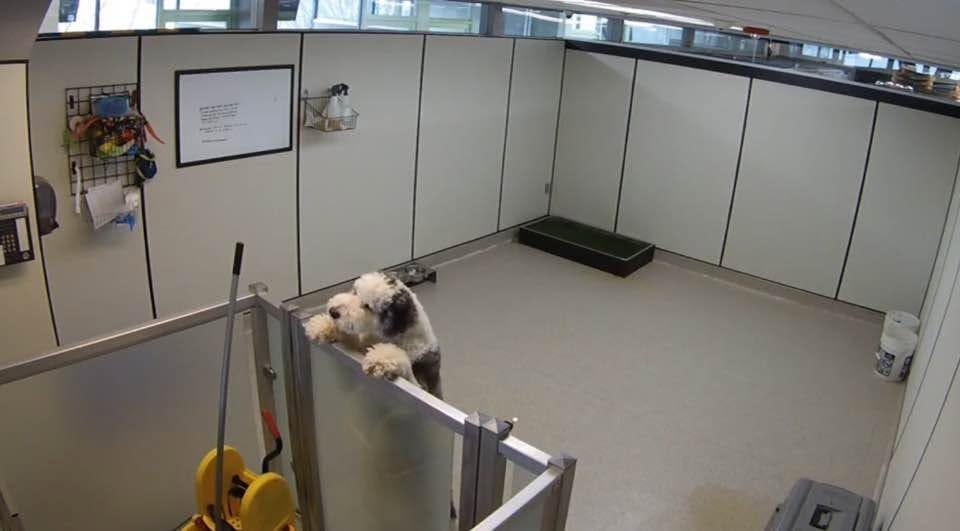
The webcam at the dog hotel. Plans were being made.
His favorite park is Council Crest, the high green crown of the city. A century ago it was an amusement park, the Dreamland of the Northwest, with a roller coaster and a Ferris wheel and a streetcar that climbed to the summit. The rides are long gone, but no one told Zuki. He takes the hill tree to tree in a flurry of hope, certain that this squirrel, this one, is finally the one. He has never caught one. But the parks are full of them, up in the branches and out on the benches, and he keeps his vigil at every one. Once, he got his proof: a squirrel on a branch right where he had sworn one would be.
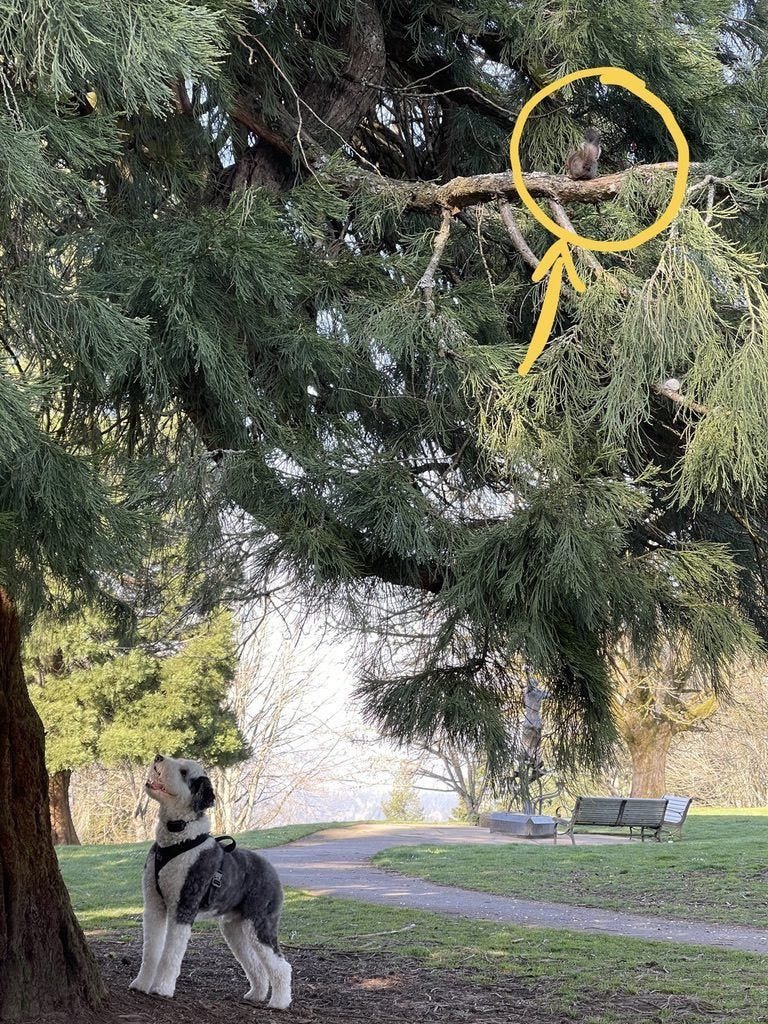
The proof, circled in yellow.
Three months is not a long way off. You can see clear across to the end of it. He cannot, and so we still drive out in the mornings, and the rabbits still keep their length of grass between us, and Zuki still leans toward them with his whole body, wanting only to close it.
A very sweet read. It is hard to say good bye to our furbabies. Zuki had led a charmed life!